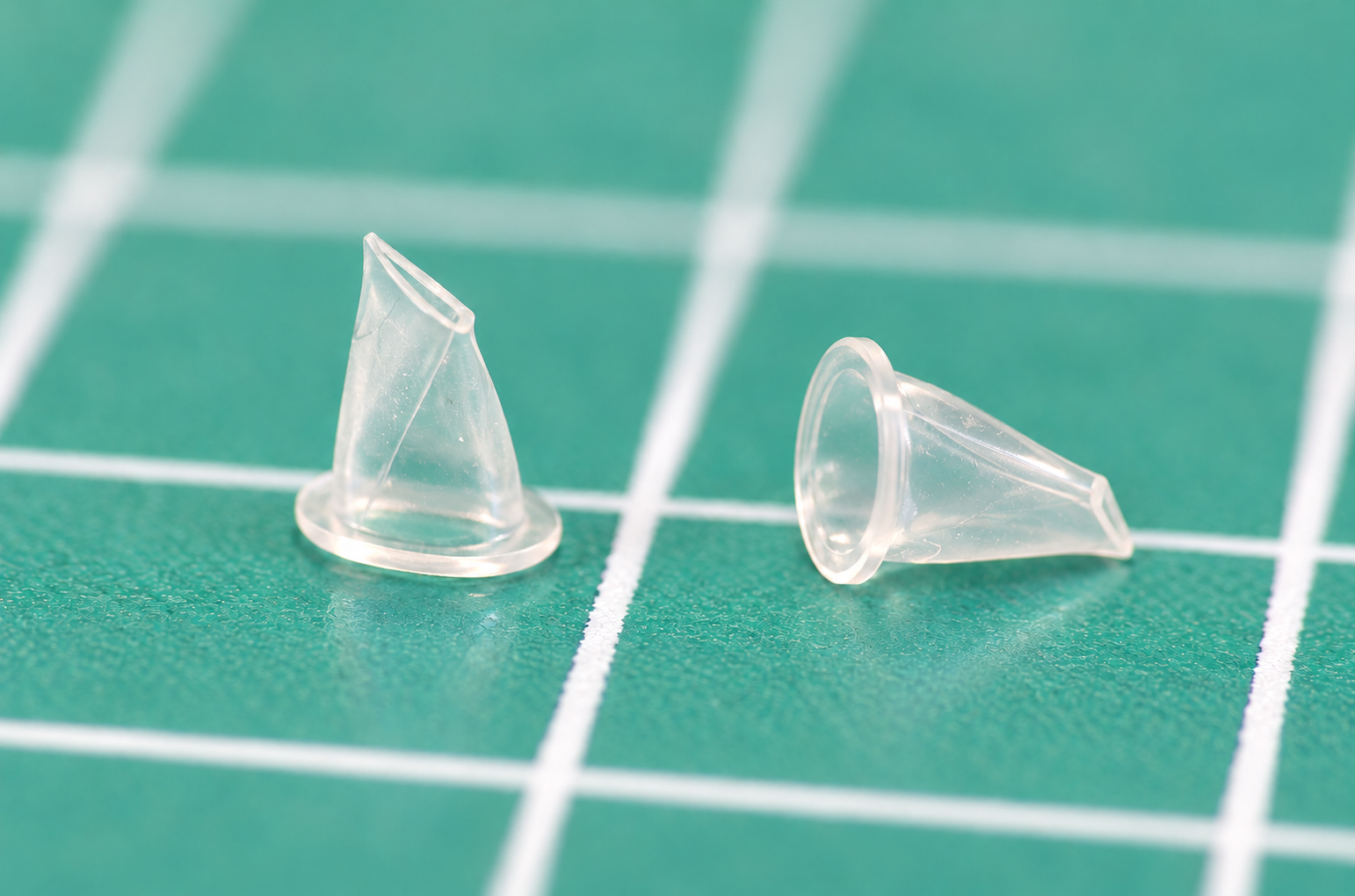
Micro catheter seals help control leakage at the interfaces of small catheter systems. For medical device developers, selecting these components means balancing sealing performance, device movement, and the space available within the assembly.
A useful specification starts with the seal’s function. Does it need to seal around an inserted catheter, close an empty access port, or seal a fixed connection? Each requirement calls for a different approach.
What Are Micro Catheter Seals?
In this guide, micro catheter seals are small sealing components used within catheter-related assemblies, including access hubs and valve housings. The term describes an application rather than a single seal geometry.
For example, a hemostasis valve may need to maintain a seal as a catheter or guidewire passes through it. Commercial valve platforms include silicone designs that accommodate device insertion and exchange, including cross-slit configurations for smaller-profile applications.
A fixed connection has different needs. It may require a static gasket or molded sealing feature without any instrument passing through the seal.
Therefore, define the operating conditions before choosing the component’s shape.
Design Priorities for Micro Catheter Seals
Sealing Across the Required Device Range
Specify the smallest and largest devices that will contact the seal. Include guidewires, catheter shafts, and any transitions that must pass through the opening.
Also, identify whether the assembly must remain sealed when no device is present. Test that condition separately from sealing around an inserted shaft.
A clear specification should state the allowable leakage, applied pressure, test fluid, and test duration. “Leak-tight” alone does not give a supplier a measurable target.
Insertion Force and Movement
A seal must allow the intended device to move through the assembly while meeting its leakage requirements.
Set limits for initial insertion, continued movement, and withdrawal. Then evaluate those forces alongside sealing performance. This gives the development team a clearer basis for comparing prototypes.
For example, a sample that passes a stationary leak test may still need further evaluation during device movement.
Housing Fit and Assembly
Micro catheter seals operate as part of an assembly. Their fit within the housing belongs in the design review.
Document the seal pocket, retention features, alignment, and assembly method. Include dimensional tolerances for both the seal and the mating components.
Prototype testing should use representative housings. Testing a loose component alone cannot establish how the assembled interface will perform.
Material Selection and Medical Use
Silicone is used in commercial catheter valve designs, but the material choice still needs to suit the specific application.
Ask suppliers for the exact compound designation and available supporting documentation. Review the intended fluid exposure, contact conditions, manufacturing process, and sterilization method.
For devices requiring biocompatibility evaluation, material documentation is only part of the assessment. The FDA evaluates the finished device, including processing and sterilization where applicable. FDA guidance on biocompatibility assessment explains this distinction.
How to Specify Micro Catheter Seals
Prepare a supplier brief that includes:
- Seal and housing drawings.
- The full device diameter range.
- Operating pressures and allowable leakage.
- Insertion and withdrawal force limits.
- Expected insertion or exchange cycles.
- Fluid exposure and sterilization conditions.
- Inspection, cleanliness, and traceability requirements.
Next, agree on a prototype test plan. Include empty-port sealing where relevant, sealing around each required device size, and performance after repeated exchanges.
This approach makes sample results easier to compare and helps reveal missing requirements before production tooling begins.
Frequently Asked Questions
Can one seal accommodate several catheter sizes?
Some valve designs accommodate a range of devices. However, the required diameter range and leakage limits should be verified in the intended assembly.
Are micro catheter seals always silicone?
No. Material selection depends on the seal’s function and operating conditions. Silicone is one option used in catheter valve designs.
When should a custom seal be considered?
Consider a custom design when an available component cannot meet the required fit, device range, leakage limit, or movement requirements.
How thin can the seal walls be?
These seals can be manufactured with wall thicknesses down to 0.003 inches—often called “three thou”—or approximately 0.076 mm. The appropriate thickness depends on the seal geometry, material, and required performance.
Start With a Clear Sealing Specification
Choosing micro catheter seals starts with defining how the assembly must perform. Bring drawings, operating conditions, and measurable acceptance criteria to the supplier discussion.
That information supports a more focused design review and a practical path from initial samples to a qualified component.
