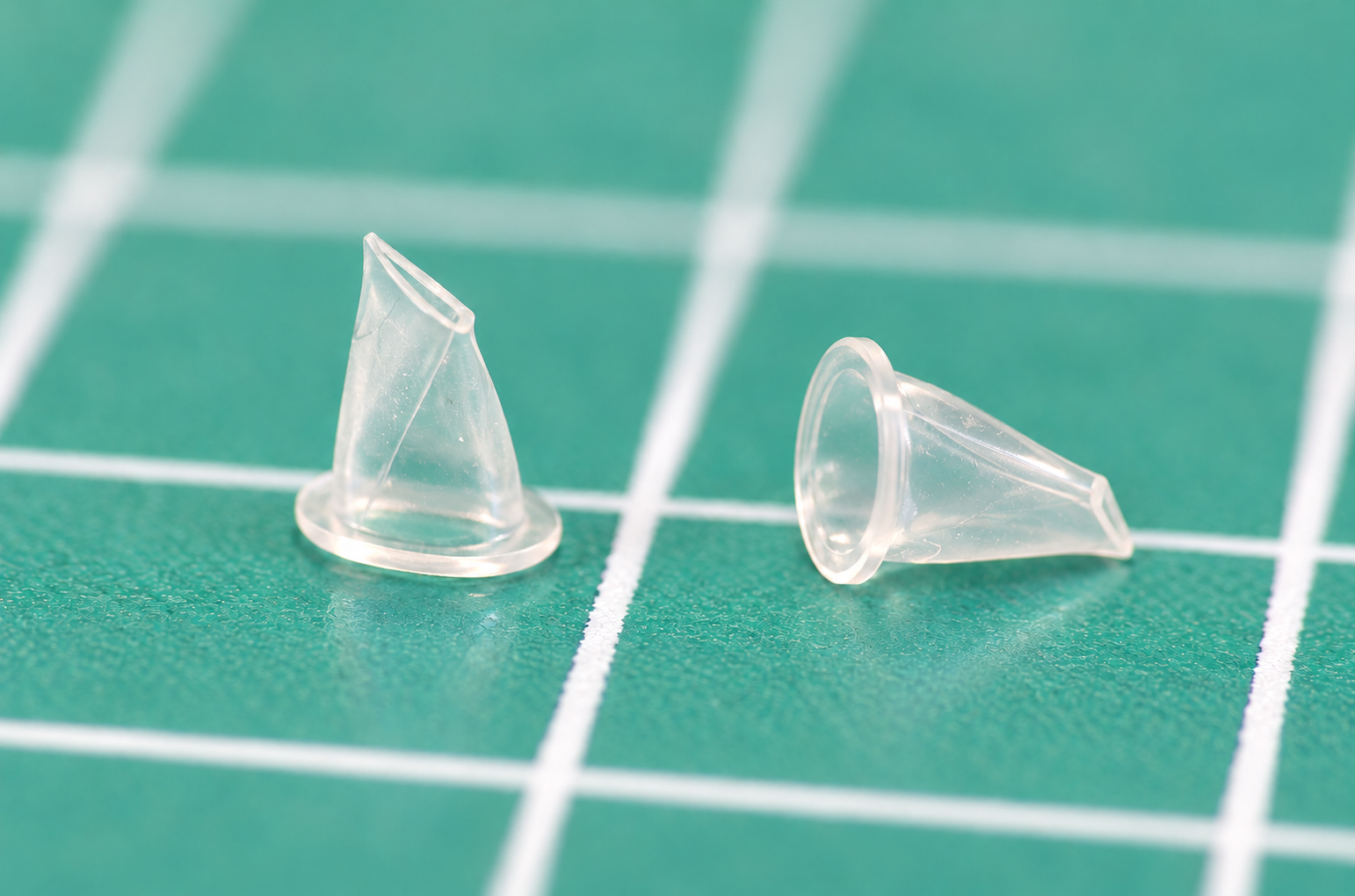
Micro duckbill seals provide a compact approach to one-way flow control. Often called miniature duckbill valves or elastomeric check valves, these components use flexible lips that open for forward flow and close against reverse pressure.
For engineers developing small fluid or air systems, the main question is how the valve performs within the complete assembly. Opening pressure, flow capacity, reverse leakage, and housing fit all belong in the selection process.
How Do Micro Duckbill Seals Work?
A duckbill valve has an elastomeric outlet shaped like a duck’s bill. Forward pressure separates the lips, allowing fluid or gas to pass. Reverse pressure pushes the lips together to resist backflow.
This design provides a one-way checking function through a flexible component. Manufacturers offer different mounting arrangements, including flanged, push-in, and sleeved versions. Minivalve’s explanation of duckbill operation describes the mechanism and installation options.
The term “micro” indicates a small component, but it does not establish a universal dimension. Specify the actual envelope, connection dimensions, and available installation space.
Key Performance Requirements for Micro Duckbill Seals
Opening Pressure
Opening pressure, also called cracking pressure, is the pressure difference needed to initiate flow.
Specify a target range rather than asking only for “low opening pressure.” The valve must open within the pressure available from the system while also meeting its reverse-sealing requirements.
For prototype comparisons, define how opening will be measured. Use consistent fluid, temperature, and flow-detection conditions.
Flow Rate and Pressure Drop
Opening the valve is only the first requirement. It must also pass the required flow within the system’s pressure budget.
Evaluate flow rate and pressure drop together. A component that opens at the desired pressure may still restrict flow more than the application allows.
Miniature valve selection therefore involves both physical fit and flow performance.
Reverse Leakage
Define an acceptable reverse-leakage limit at a stated pressure and duration.
Include any low-pressure condition that matters to the application. Also, decide whether leakage must be measured before and after repeated operation.
A measurable requirement gives engineering and purchasing teams a shared basis for approving samples.
Materials and Manufacturing Considerations
Duckbill valves are available in different elastomers, including silicone and fluorosilicone. The compound should suit the intended fluid, temperature, and exposure conditions.
Geometry and manufacturing also deserve attention. The valve’s lips and slit form its working interface, so their consistency matters during supplier evaluation. Precision molding and slit preparation are established considerations in miniature duckbill manufacturing.
Request the material designation, critical dimensions, inspection approach, and functional test method. These details help connect a drawing to the performance expected from production parts.
For medical applications requiring biocompatibility evaluation, assess the finished device and its processing conditions. A material described as “medical grade” does not by itself establish suitability for every device. The FDA’s biocompatibility assessment guidance explains the role of materials, manufacturing, and sterilization.
Test Micro Duckbill Seals in the Intended Housing
Include the valve’s mounting arrangement in the prototype plan. Confirm flow direction, retention, and the seal between the component and its housing.
Then test the assembled system against defined acceptance criteria:
- Opening pressure.
- Flow at specified pressure differences.
- Reverse leakage.
- Performance after the expected operating cycles.
- Performance after relevant storage or sterilization conditions.
Record the test setup as well as the result. Consistent methods make it easier to compare design revisions and supplier samples.
Frequently Asked Questions
Are micro duckbill seals the same as check valves?
They are a type of check valve. “Duckbill” describes the flexible lip geometry used to establish one-way flow.
Can duckbill valves handle air and liquids?
Duckbill designs are used for both. Select and test the component for the actual medium and operating conditions.
Can a duckbill seal replace a catheter access seal?
The functions differ. A one-way flow valve does not automatically provide sealing around an inserted catheter or guidewire.
How thin can the seal walls be?
These seals can be manufactured with wall thicknesses down to 0.003 inches—often called “three thou”—or approximately 0.076 mm. The appropriate thickness depends on the seal geometry, material, and required performance.
Prepare Your Valve Requirements Before Requesting Samples
For micro duckbill seals, share the available space, fluid, pressure range, required flow, and reverse-leakage limit with the supplier.
A clear specification helps identify suitable standard components and determine whether a custom design needs further development.
